
Demons
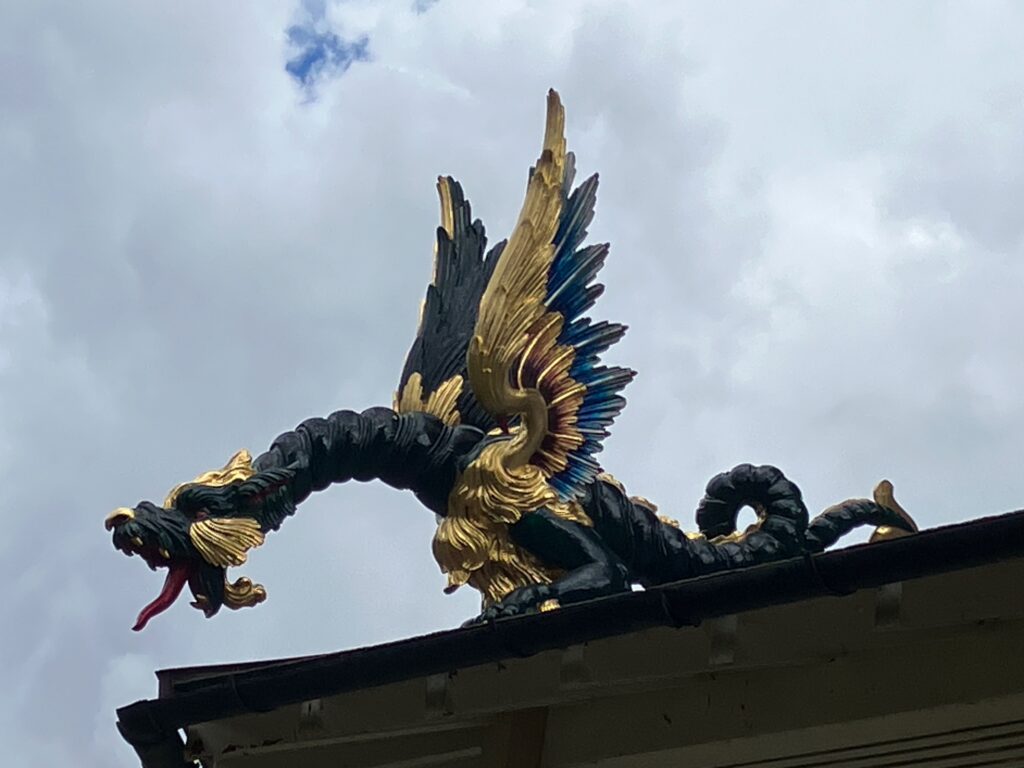
In the centuries since Shakyamuni, false views are deep,
Demons are strong, the Dharma is weak, disturbances are many.
People hear the Buddha’s doctrine of immediacy
And if they accept it, the demons will be crushed
As easily as a roofing tile
But they cannot accept it, what a pity. (from the Shodoka)
I don’t think much has changed since Yung Chia’s time in 9th c. China. In our world today disturbances are many, demons are strong. Mind you, they have never been in short supply. Who or what are demons? As beings with particular characters, they abound in Buddhist myth and cosmology. They exist interestingly as energies which, originally harmful, have the capacity to become forces for the good. If the Buddha’s doctrine of immediacy is realised—that is, if you apprehend the one liberating truth that lives inescapably right here and now where you stand—demons can be crushed, seen through as the ephemeral non-entities that they are. Or to put it another way, they cease to be separate from the whole. In Tibetan Buddhism traditionally they are understood not to have been destroyed but to have been transformed. This is the way of tantra where greed becomes selfless love, hatred becomes compassionate action and ignorance becomes wisdom.
In all cultures, I believe, demons are synonymous with hell realms. Being assailed by them is a torment. They represent powerful movements in the mind, mental formations, emotions and intrusive thoughts with which we may identify, thus reinforcing ego, the belief in isolated self. These demons can feel very “real!” Like old acquaintances. One’s impulse is usually to exclude them in order to be rid of them. Which of course means that their insistence grows. They demand inclusion. And as such, they may serve to strengthen practice. They can not only wake us up but redeem us.
To embrace suffering as the Dharma is transformational. But not necessarily easy. The discipline of practice is demanding. One must stay steady and still and focussed. To distract the Buddha, to keep him from becoming enlightened, Mara sent his three beautiful daughters on the one hand and his army of fear on the other. He generated the “eight worldly winds,” presenting dramas of pleasure and pain, gain and loss, fame and shame, success and failure, a back and forth ping pong, tempting the Buddha to fall down on one side or the other. But the Buddha sat and sat, not swayed, his mind open as the sky, realising, finally, that one great body. “All beings are the Tathgatha.”
Grace Schireson in her book Zen Women writes about the 12th c. nun Miaodao who studied with prominent Zen Master Dahui, and, most unusually, became one of his Dharma heirs. She first came to him and said, “I am not yet clear about myself and therefore I wish to beg for instruction.” His advice to her? “Sit with all the noise and demonic obstacles in the mind.” What brilliant counsel. It normalises and encompasses “the noise and demonic obstacles” when it seems that they are encompassing. The fear of “something to contend with” vanishes. Inclusive compassion wins the day and transforms the mind.
These Encouraging Words are written by Maggie Gluek, roshi and are published in SZC’s June/July 2026 Newsletter